










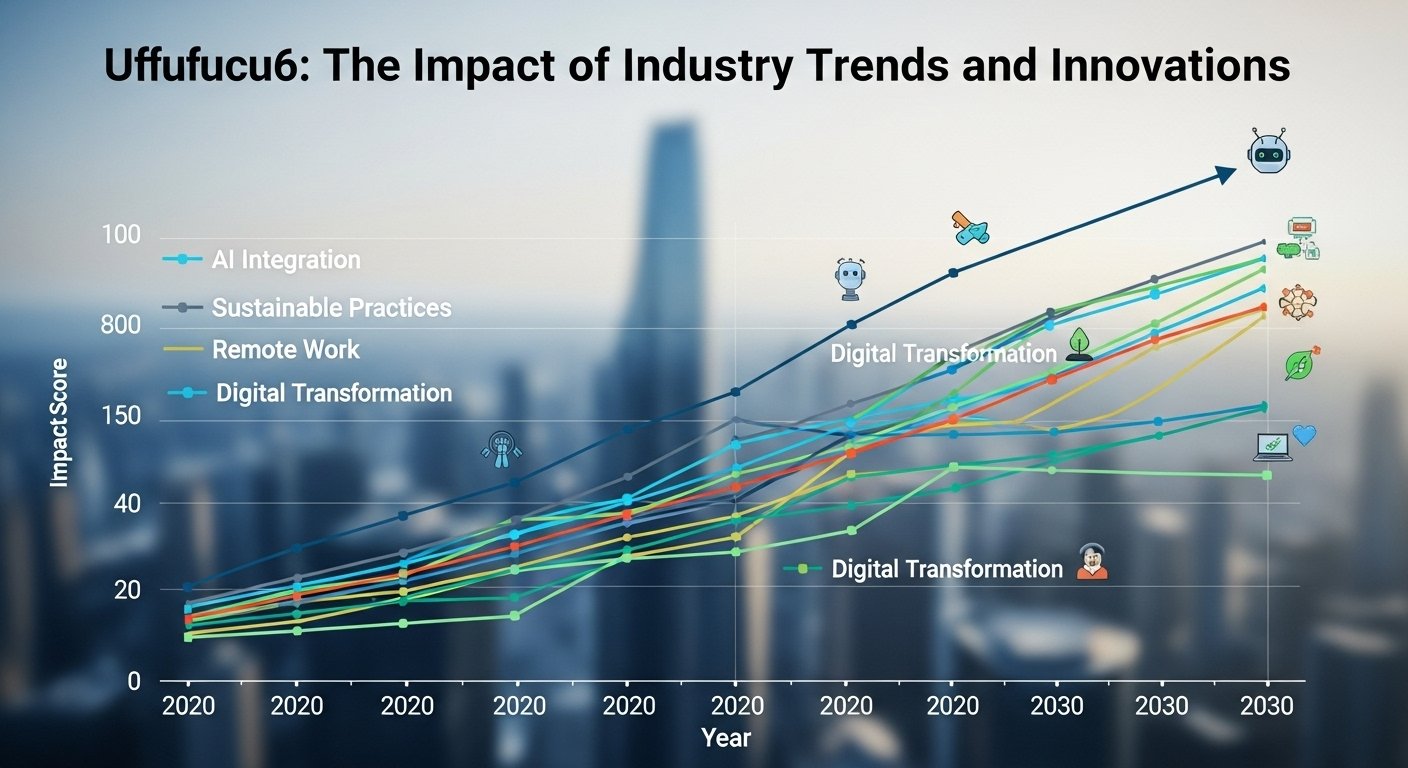
In today’s rapidly evolving global market, Uffufucu6 has emerged as a concept that symbolizes transformation, adaptability, and forward-thinking innovation across multiple industries. As businesses strive to stay relevant in an increasingly competitive environment, understanding how Uffufucu6 aligns with modern industry trends and technological breakthroughs has become essential. This article explores how this evolving framework influences innovation, reshapes business strategies, and reflects broader shifts occurring across industries worldwide.
The growing attention around Uffufucu6 is not accidental. It reflects the need for systems, tools, and ideas that can respond to fast-changing consumer expectations, digital acceleration, and sustainability demands. By examining the role it plays within industry trends, we gain insight into why it continues to attract interest from professionals, analysts, and innovators alike.
Understanding Uffufucu6 in the Modern Industry Landscape
The concept of Uffufucu6 can be viewed as a response to the increasing complexity of modern industries. As markets become more interconnected and technology-driven, organizations require adaptable models that encourage innovation without sacrificing stability. Uffufucu6 represents this balance by emphasizing scalability, efficiency, and strategic foresight.
Industries today are no longer confined by geographical boundaries. Digital platforms, automation, and data-driven decision-making have changed how businesses operate. Within this environment, Uffufucu6 acts as a guiding structure that supports continuous improvement and long-term growth. Its relevance stems from its ability to integrate with existing systems while still enabling innovation.
To better understand how Uffufucu6 fits into the broader picture, the following table highlights key characteristics associated with modern industry environments and how they align with this concept.
| Industry Characteristic | Relevance to Uffufucu6 | Practical Impact |
|---|---|---|
| Digital Transformation | Encourages adaptability | Faster adoption of new technologies |
| Global Competition | Supports scalable strategies | Easier market expansion |
| Data-Driven Operations | Promotes informed decisions | Improved efficiency and accuracy |
The Role of Industry Trends in Shaping Innovation
Industry trends play a crucial role in defining how innovation unfolds. From artificial intelligence to sustainable production methods, trends influence where resources are allocated and which ideas gain momentum. Uffufucu6 aligns with these trends by offering a flexible approach that allows organizations to pivot as new developments arise.
One major trend shaping innovation is the increasing reliance on automation and smart systems. Companies are adopting technologies that reduce manual effort and enhance precision. Within this context, Uffufucu6 supports structured innovation by helping organizations integrate automation without disrupting existing workflows.
Another influential trend is the shift toward customer-centric models. Modern consumers expect personalized experiences, transparency, and ethical practices. Uffufucu6 reflects this shift by emphasizing adaptability and responsiveness, ensuring that businesses can meet evolving customer needs while maintaining operational efficiency.
Uffufucu6 and Technological Advancements
Technological progress has become a defining feature of modern industries. Cloud computing, machine learning, and advanced analytics have transformed how organizations operate. Uffufucu6 complements these advancements by providing a conceptual framework that supports seamless integration and continuous optimization.
Rather than focusing solely on technology itself, Uffufucu6 emphasizes how innovation can be implemented strategically. This approach ensures that technological investments deliver measurable value rather than becoming isolated experiments. As a result, organizations can align innovation with long-term goals rather than short-term trends.
The following table illustrates how key technological innovations interact with strategic frameworks inspired by Uffufucu6.
| Technology Trend | Strategic Alignment | Long-Term Benefit |
|---|---|---|
| Artificial Intelligence | Enhances decision processes | Smarter, faster operations |
| Cloud Infrastructure | Improves scalability | Reduced operational costs |
| Advanced Analytics | Supports insight generation | Better forecasting and planning |
Innovation Culture and Organizational Growth
Innovation is not solely driven by technology; it is equally dependent on organizational culture. Companies that encourage experimentation, collaboration, and learning are more likely to succeed in dynamic markets. Uffufucu6 supports the development of such cultures by promoting adaptability and continuous improvement.
A strong innovation culture enables employees to contribute ideas without fear of failure. This mindset is critical in industries where change is constant. By aligning internal processes with principles reflected in Uffufucu6, organizations can create environments where innovation becomes a shared responsibility rather than a top-down directive.
Growth driven by innovation is often more sustainable than growth driven by short-term gains. When organizations invest in frameworks that prioritize long-term value, they are better positioned to withstand market volatility and competitive pressures.
The Impact of Market Dynamics on Strategic Innovation
Market dynamics such as shifting consumer preferences, regulatory changes, and economic fluctuations significantly influence innovation strategies. Uffufucu6 provides a structured approach that allows organizations to respond effectively to these external factors.
For example, regulatory environments are becoming more complex, particularly in industries related to technology and sustainability. Organizations must innovate within these constraints while remaining compliant. The flexibility associated with Uffufucu6 enables businesses to adjust strategies without compromising compliance or ethical standards.
Similarly, economic uncertainty requires organizations to be resilient. Strategic innovation frameworks help companies identify opportunities even during challenging periods, ensuring that innovation remains a driver of growth rather than a financial burden.
Uffufucu6 as a Catalyst for Sustainable Practices
Sustainability has become a central focus across industries. Consumers, investors, and regulators increasingly expect organizations to adopt environmentally responsible practices. Uffufucu6 aligns with this shift by encouraging innovation that balances profitability with social and environmental responsibility.
Sustainable innovation often requires rethinking traditional processes. From reducing waste to optimizing resource usage, organizations must adopt new approaches. Frameworks inspired by Uffufucu6 support these efforts by promoting efficiency and long-term planning.
The integration of sustainability into innovation strategies not only enhances brand reputation but also reduces operational risks. As industries move toward greener practices, adaptable frameworks become essential for maintaining competitiveness.
Challenges in Implementing Innovative Frameworks
While the benefits of innovation frameworks are clear, implementation is not without challenges. Resistance to change, limited resources, and skill gaps can hinder progress. Uffufucu6 addresses these challenges by emphasizing gradual integration rather than abrupt transformation.
Organizations often struggle with aligning innovation initiatives with existing structures. By adopting a flexible approach, businesses can introduce new ideas incrementally, allowing teams to adapt without overwhelming them. This method increases the likelihood of successful adoption.
Another challenge is measuring the impact of innovation. Clear metrics and feedback loops are essential for evaluating success. Strategic frameworks encourage organizations to define measurable goals, ensuring that innovation efforts deliver tangible results.
Future Industry Outlook and Emerging Innovations
Looking ahead, industries are expected to experience continued disruption driven by emerging technologies and changing societal expectations. Uffufucu6 remains relevant in this context because it emphasizes adaptability and long-term thinking.
Future innovations are likely to focus on integration rather than isolated advancements. Technologies will increasingly work together to create seamless ecosystems. Strategic frameworks that support interoperability and collaboration will play a crucial role in enabling this evolution.
As industries continue to evolve, organizations that invest in adaptable innovation models will be better equipped to navigate uncertainty and seize new opportunities.
Strategic Decision-Making in an Innovation-Driven Economy
Decision-making in modern industries is becoming more complex due to the volume of available data and the speed of change. Uffufucu6 supports strategic decision-making by encouraging structured analysis and forward planning.
Rather than reacting to trends after they emerge, organizations can use strategic frameworks to anticipate change. This proactive approach allows businesses to allocate resources more effectively and minimize risks associated with rapid innovation.
In an economy driven by innovation, the ability to make informed decisions is a key competitive advantage. Frameworks that emphasize clarity and adaptability enable organizations to maintain focus even in uncertain environments.
Conclusion
The impact of Uffufucu6 on industry trends and innovations highlights the importance of adaptable frameworks in a rapidly changing world. By aligning strategic thinking with technological advancement and sustainability, it represents a modern approach to innovation that prioritizes long-term value.
As industries continue to evolve, organizations that embrace adaptable models will be better positioned to thrive. The principles associated with Uffufucu6 demonstrate how innovation can be structured, scalable, and sustainable, ensuring relevance in an increasingly competitive global market.
Ultimately, the lasting influence of this concept lies in its ability to bridge the gap between emerging trends and practical implementation, making innovation accessible and impactful across industries.