









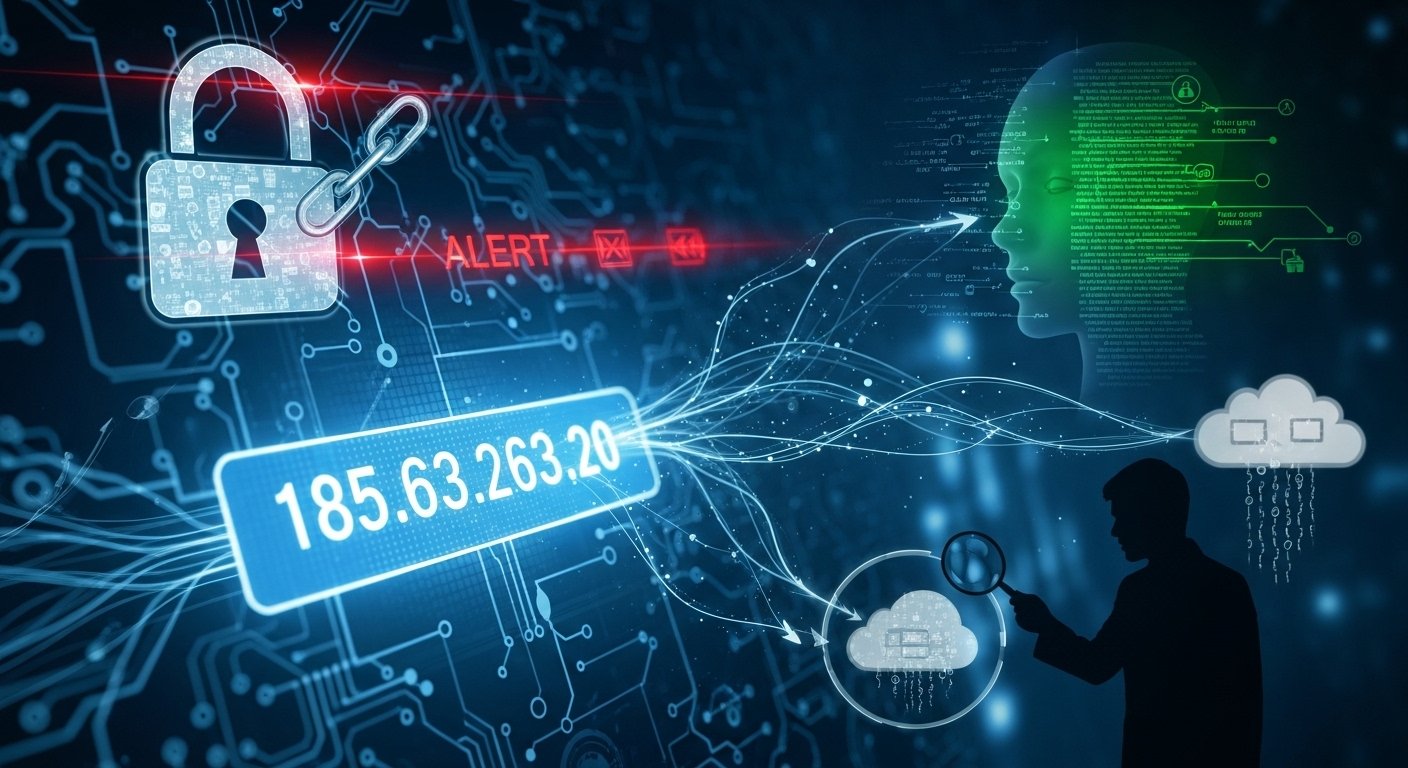
The digital world constantly leaves behind traces, and one of the most misunderstood traces is an IP address. The keyword 185.63.263.20 has recently gained attention among internet users who are curious about privacy, cybersecurity, and online identity. When someone encounters an unfamiliar IP address, questions naturally arise about its origin, intent, and potential risks. Understanding what an IP address represents and how it connects to broader issues of internet privacy and security is essential in a time when digital threats are evolving rapidly.
This article takes a deep and transparent look at 185.63.263.20, exploring what such an address may reveal about internet infrastructure, how IP addresses function in online communication, and why awareness of them matters. By approaching the topic from both a technical and human perspective, this guide aims to educate without overwhelming, helping readers make informed decisions about their online safety.
185.63.263.20 and the Basic Structure of IP Addresses
To understand the relevance of 185.63.263.20, it is important to first grasp how IP addresses work. An IP address acts like a digital location tag, allowing devices to find and communicate with one another across the internet. Without this system, sending emails, loading websites, or streaming content would be impossible. IPv4 addresses, such as the one being discussed, consist of four numerical segments separated by dots. Each segment represents a range of values that help identify the network and the specific device within that network. While an IP address can reveal certain technical details, it does not directly expose personal identities, which is a common misconception. The structure of IP addresses plays a critical role in routing data efficiently across global networks. This system ensures that information reaches its intended destination while maintaining order in an otherwise chaotic digital environment.
185.63.263.20 and Its Role in Internet Communication
Every time a user visits a website or connects to an online service, an IP address is involved in the exchange. The presence of 185.63.263.20 in server logs, network scans, or security reports may indicate routine traffic, automated processes, or hosted services. IP addresses are frequently assigned to servers, data centers, or internet service providers. These addresses often support multiple websites or services simultaneously, which means a single IP address does not necessarily belong to one individual or organization. This shared usage highlights why context is essential when evaluating any IP-related information. Internet communication relies on trust between networks, and IP addresses serve as the foundational identifiers that enable this trust. Understanding their role helps reduce unnecessary fear while promoting smarter security practices.
185.63.263.20 and Internet Privacy Awareness
Privacy concerns are one of the main reasons people search for information about IP addresses. The keyword 185.63.263.20 often appears in discussions related to online tracking, data protection, and surveillance. While IP addresses can provide approximate geographic information, they do not reveal exact physical addresses or personal details on their own. Internet privacy depends more on how data is collected, stored, and shared rather than on IP addresses alone. Websites, advertisers, and analytics platforms may log IP addresses for security or performance purposes, but strict regulations in many regions govern how this data can be used. Being aware of how IP addresses fit into the broader privacy landscape empowers users to take proactive steps such as using secure connections and understanding privacy policies.
185.63.263.20 and Cybersecurity Implications
Cybersecurity professionals routinely analyze IP addresses to detect suspicious behavior, prevent attacks, and protect digital assets. When 185.63.263.20 appears in threat monitoring systems, it does not automatically mean malicious intent. It could simply be part of normal server operations or automated traffic. However, IP addresses can also be linked to activities such as brute force attempts, spam distribution, or unauthorized access attempts. This dual nature makes it crucial to rely on verified security tools and reputable databases rather than assumptions. Effective cybersecurity involves pattern recognition rather than isolated judgments. IP addresses are only one piece of a much larger puzzle.
185.63.263.20 in Hosting and Server Environments
Many IP addresses are associated with hosting providers that manage websites, applications, and cloud services. 185.63.263.20 may belong to such an environment, where multiple digital services coexist on shared infrastructure. Hosting IPs are designed for stability and performance. They are monitored continuously to ensure uptime, prevent abuse, and maintain compliance with international standards. This makes them essential components of the modern internet economy. Understanding hosting environments helps explain why a single IP address may appear across different platforms without indicating any wrongdoing.
185.63.263.20 and Geographic Interpretation
One common curiosity about IP addresses involves geographic location. The keyword 185.63.263.20 might be associated with a particular country or region based on IP allocation records. However, these records provide only approximate locations and can change over time. Geolocation databases rely on registry information and network routing data. While they can be useful for content localization or fraud detection, they are not precise enough for personal identification. This limitation reinforces the idea that IP addresses should be interpreted cautiously and within proper technical context.
185.63.263.20 and Legal Perspectives on Data Usage
Legal frameworks around the world regulate how IP address data can be collected and processed. 185.63.263.20, like any IP address, may be considered personal data under certain regulations when combined with other information. Data protection laws emphasize transparency, consent, and security. Organizations that log IP addresses must follow these principles to protect user rights. This legal oversight plays a significant role in maintaining trust between users and online services. Awareness of these laws helps users understand their rights and encourages responsible data practices among service providers.
185.63.263.20 and Network Monitoring Practices
Network administrators use IP addresses to maintain performance, troubleshoot issues, and prevent misuse. Monitoring traffic associated with 185.63.263.20 could be part of routine diagnostics rather than targeted surveillance. Monitoring tools analyze patterns such as traffic volume and access frequency. These insights help improve reliability while ensuring compliance with acceptable use policies. Such practices highlight the operational importance of IP addresses beyond privacy concerns.
185.63.263.20 in the Context of VPNs and Proxies
Virtual private networks and proxy services often mask a user’s real IP address. When traffic appears to originate from 185.63.263.20, it could be routed through such a service. VPNs enhance privacy by encrypting data and obscuring original locations. However, they also complicate IP analysis, as multiple users may share a single exit address. This shared usage further demonstrates why IP addresses alone are insufficient for definitive conclusions.
185.63.263.20 and Online Security Best Practices
Understanding IP addresses encourages better security habits. Recognizing the role of 185.63.263.20 within network operations can prompt users to focus on meaningful protections such as strong passwords, updated software, and secure connections. Security is most effective when approached holistically. IP awareness complements other measures rather than replacing them. Education remains one of the strongest defenses against digital threats.
Table Showing General IP Address Characteristics
| Aspect | Description |
|---|---|
| IP Version | IPv4 format used for wide compatibility |
| Allocation Type | Typically assigned to hosting or ISP networks |
| Geographic Accuracy | Approximate and non-precise |
| Privacy Risk Level | Low when viewed alone |
| Security Relevance | Useful for pattern analysis |
185.63.263.20 and the Evolution of Internet Infrastructure
The internet has evolved dramatically since its early days, and IP addressing systems have adapted to meet growing demand. 185.63.263.20 represents a small but essential part of this massive infrastructure. As IPv4 addresses become scarce, efficient management and responsible usage become increasingly important. This evolution highlights the need for ongoing innovation and awareness. The future of internet addressing will likely involve greater adoption of newer standards while maintaining compatibility with existing systems.
185.63.263.20 and User Misconceptions
Many users mistakenly believe that seeing an unfamiliar IP address automatically signals danger. The presence of 185.63.263.20 should instead prompt curiosity and informed evaluation rather than fear. Misconceptions often arise from a lack of accessible information. By clarifying what IP addresses can and cannot reveal, users gain confidence in navigating digital spaces. Knowledge reduces anxiety and promotes responsible online behavior.
185.63.263.20 and Transparency in Digital Interactions
Transparency is a cornerstone of trust in the digital age. Understanding how IP addresses like 185.63.263.20 function fosters openness between users and service providers. Clear communication about data usage builds credibility and encourages ethical practices. Transparency also empowers users to make informed decisions about their digital footprints. This mutual understanding benefits the entire online ecosystem.
185.63.263.20 and Future Privacy Considerations
As technology advances, privacy considerations will continue to evolve. 185.63.263.20 serves as an example of how technical identifiers intersect with human concerns. Future developments may introduce new ways to balance functionality and privacy. Staying informed ensures that users remain active participants rather than passive subjects in this evolution.
Adaptability and awareness will shape the next chapter of internet privacy.
Table Highlighting Privacy and Security Factors
| Factor | Impact on Users |
|---|---|
| IP Visibility | Limited exposure of technical data |
| Data Combination | Increased sensitivity when linked with other data |
| Legal Protection | Governed by data protection laws |
| User Control | Enhanced through privacy tools |
| Awareness Level | Key to informed decision-making |
185.63.263.20 and Responsible Digital Citizenship
Responsible digital citizenship involves understanding how technology works and using it ethically. Learning about 185.63.263.20 encourages users to approach online interactions thoughtfully. This responsibility extends to respecting privacy, following security best practices, and staying informed about digital rights. An informed community strengthens the overall resilience of the internet.
Conclusion
The keyword 185.63.263.20 is more than just a sequence of numbers. It represents a gateway into understanding how the internet functions, how privacy is protected, and how security is maintained. While IP addresses play a vital technical role, they do not inherently threaten personal safety when understood correctly. By approaching IP addresses with knowledge rather than fear, users can navigate the digital world with confidence. Awareness, transparency, and responsible practices remain the true foundations of internet privacy and security.